Pay in installments of $7.20 with
 ,
,
 and
and

Shipping Estimate
USA
- USA
- CAN
- USA
- CAN
Ships within 48 hours · Estimated delivery Jun 29 - Jul 4
 Promo Codes Available:
For Your Every Summer RSVP, with Code: SUMMER15
Description
russian lavender plant Russian Sage Phoenix, AZ | Perovskia atriplicifoliaPhoenix's Top Lavender Blue Perennial for Year Round Color Russian Sage (Perovskia atriplicifolia) is one of the most elegant and carefree perennials you can grow in the Phoenix Valley. Airy clouds of lavender blue flowers float above silvery, aromatic foliage from late spring well into fall, creating a soft, hazy texture that no other desert plant can match. This heat loving, drought tolerant workhorse thrives in full sun, handles reflected heat,
Phoenix's Top Lavender-Blue Perennial for Year-Round Color
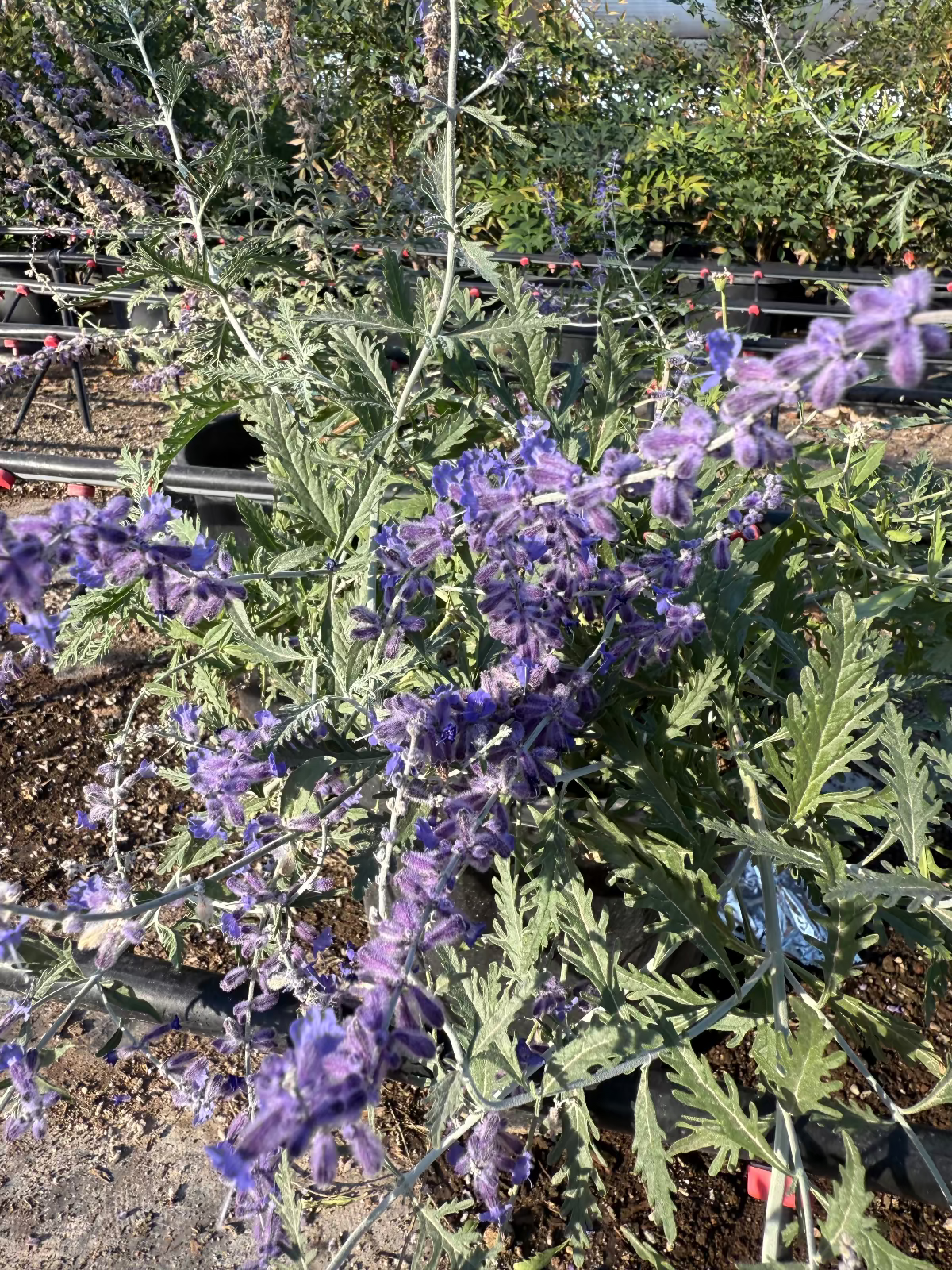
Russian Sage (Perovskia atriplicifolia) is one of the most elegant and carefree perennials you can grow in the Phoenix Valley. Airy clouds of lavender-blue flowers float above silvery, aromatic foliage from late spring well into fall, creating a soft, hazy texture that no other desert plant can match. This heat-loving, drought-tolerant workhorse thrives in full sun, handles reflected heat, tolerates poor soil, and looks stunning all season with minimal care. Whether you're softening a Scottsdale modern landscape, adding cool color to a Chandler Mediterranean garden, or filling a Mesa border with billowy texture — Russian Sage is the elegant anchor that ties everything together.
Russian Sage Plant Details
| Attribute | Detail |
|---|---|
| Scientific Name | Perovskia atriplicifolia |
| Common Names | Russian Sage |
| Mature Height | 3–5 feet |
| Mature Width | 2–4 feet |
| Growth Rate | Fast — 2–3 feet per year in Phoenix |
| Sun | Full sun (6+ hrs). Thrives in reflected heat from walls and pavement. |
| Water | Low once established. Very drought-tolerant. |
| USDA Zones | 5–10 (Phoenix is Zone 9b–10a) |
| Soil | Well-draining. Adapts to Arizona caliche and alkaline soils. |
| Foliage | Semi-deciduous — aromatic silver-gray foliage; may die back in winter and regrow in spring |
| Bloom Color | Lavender-blue to violet |
| Bloom Season | Late spring through fall |
Russian Sage Uses in Phoenix Landscapes
Mixed Desert Borders & Foundation Plantings
Russian Sage's airy, billowy habit makes it the perfect mid-height filler in desert borders. Plant it between taller shrubs like Texas Sage or Yellow Bells and lower groundcovers like Angelita Daisy or Trailing Lantana. Its cool lavender-blue tones complement warm desert colors beautifully. Space 3–4 feet apart for a flowing, naturalistic look.
Mediterranean & Modern Landscape Design
Russian Sage is a staple of Mediterranean-style gardens in Scottsdale, Paradise Valley, and Tempe. Its silvery foliage and violet blooms pair perfectly with ornamental grasses, Lavender, Rosemary, and Red Yucca for a refined, low-water landscape that looks intentionally designed rather than wild.
Pool-Friendly Plantings
With minimal leaf litter and no thorns, Russian Sage is an excellent choice near pools and patios. Its soft texture and long bloom season provide color and movement without the mess. Plant 3–4 feet from pool edges for a polished look in Gilbert, Peoria, or Queen Creek.
Best Time to Plant Russian Sage in Phoenix
Fall (October–November) is ideal — warm soil promotes fast root establishment while cool air reduces transplant stress. The plant gets 6–8 months to build a strong root system before its first Phoenix summer. Spring (February–April) is the second-best window. Avoid summer planting.
How to Plant Russian Sage
- Dig wide, not deep — 2–3x the root ball width, same depth
- Check for caliche — break through any hardpan layer for drainage
- Backfill with native soil — a light 20% organic blend is fine
- Spacing — 3–4 ft apart for mass plantings; 4 ft for individual specimens
- Water basin — build a 3–4 inch ring to direct water to roots
- Mulch — 2–3 inches of gravel or bark mulch to retain moisture
Watering Russian Sage in Phoenix
First Year Watering Schedule
- Weeks 1–2: Every 2–3 days, deep and slow (20–30 min)
- Month 1–2: Every 3–4 days
- Month 3–6: Every 7–10 days
- After Year 1: Every 10–14 days summer; every 3–4 weeks winter
Drip Irrigation
Place one 2 GPH emitter 12–18 inches from the base. Once established, Russian Sage is very drought-tolerant and overwatering can cause leggy, floppy growth — lean watering keeps the plant compact and upright.
How fast does Russian Sage grow in Phoenix?
Fast. A 1-gallon plant typically reaches 3–4 feet tall and wide within one to two growing seasons.
Does Russian Sage die back in winter?
It may go semi-dormant and lose some foliage after the first hard frost. Cut it back to 6–12 inches in late winter (January–February) and it will regrow vigorously in spring with fresh silvery foliage and heavy blooms.
Is Russian Sage deer and rabbit resistant?
Yes. The aromatic foliage is highly deer and rabbit resistant — they almost never browse it.
Does Russian Sage attract pollinators?
Absolutely. The lavender-blue flowers are a favorite of bees, butterflies, and beneficial insects throughout the long bloom season.
You May Also Like
- Yellow Bells — Bright yellow trumpet flowers that contrast beautifully with Russian Sage's lavender blooms.
- Red Verbena — Low-growing red blooms. Stunning color contrast planted in front of Russian Sage.
- Gaura White — Airy white butterfly-like flowers. A graceful companion with similar texture.
- Mexican Honeysuckle — Shade-tolerant orange blooms for layered garden interest.
How Many Russian Sage Do I Need?
Russian Sage matures at 2 to 4 ft wide, so space plants about 3 ft apart for a flowing mass or drift. Use the table below to estimate plant counts for a border run.
| Border / mass run | Plants needed (3 ft spacing) |
|---|---|
| 6 ft | 2 plants |
| 9 ft | 3 plants |
| 15 ft | 5 plants |
| 30 ft | 10 plants |
Russian Sage Season-by-Season in Phoenix
- Spring (Feb to Apr): Fresh silver foliage flushes from the late-winter cutback and the first lavender-blue flower spikes open. A strong second planting window once nights warm.
- Summer (May to Sep): Peak bloom. Thrives in full reflected heat against walls and pavement, and the monsoon humidity does not bother it. Lean watering keeps the stems upright instead of floppy.
- Fall (Oct to Nov): Bloom continues into fall and this is the prime planting season for fast root establishment before winter.
- Winter (Dec to Jan): Goes semi-dormant and may lose foliage after the first hard frost. Cut back to 6 to 12 inches in late winter; it is hardy far below Phoenix lows and returns vigorously in spring. No frost protection needed.
At a Glance
✔ Heat-Loving (Reflected-Heat Tolerant) ✔ Drought-Tolerant ✔ Pollinator-Friendly ✔ Pool-Friendly (Low-Litter) ✔ Low-Maintenance ✔ Deer & Rabbit-Resistant ✔ Cold-Hardy to -10°F
Plant It With
- Yellow Bells: bright yellow trumpets that pop against Russian Sage's cool lavender haze.
- Red Verbena: low red bloomer that makes a vivid front-of-border contrast.
- Rosemary 'Tuscan Blue': fellow silver-foliaged, low-water Mediterranean shrub for a coordinated palette.
- Mexican Honeysuckle: softer orange-bloomed filler that layers in part-shade pockets nearby.
Is Russian Sage Right for Your Yard?
Plant it in full sun with good drainage, including hot reflected-heat spots and pool-side beds where its clean, low-litter habit shines. It is fast, forgiving of poor caliche soil, and cold-hardy through any Valley winter. Not a fit if your only space is shady or stays consistently wet, since too much water makes it flop open and lose its upright form.
Shipping Notes
- Free Standard Shipping on $100+ Orders to the USA.
- Except Preorder products are shipped in 48 hours.
- Delivery to the USA:
- Standard Shipping : 3-10 business days
- If time is of the essence, please consider selecting expedited delivery for faster service.
Exchange/Return Notes
- We offer a 30-day return/exchange service after receiving.
- Final sale items are not eligible for returns or exchanges.
- To process your return/exchange, please contact us at [email protected]
- Please click here for more details>>> Return & Exchange Policy